
About
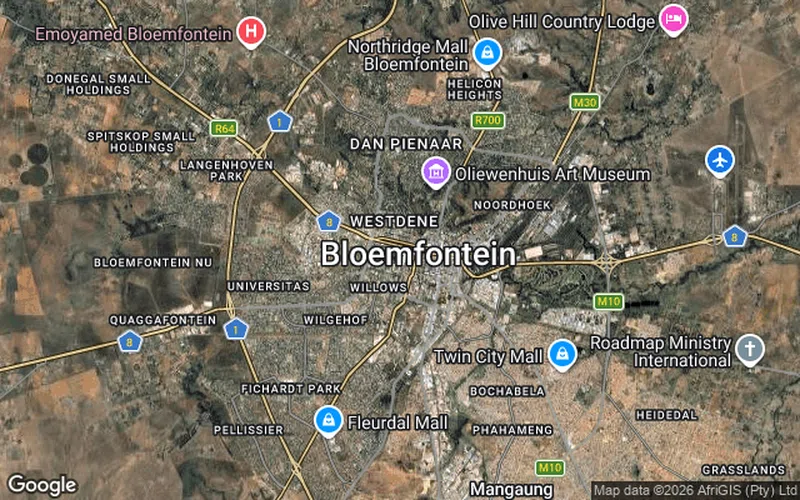
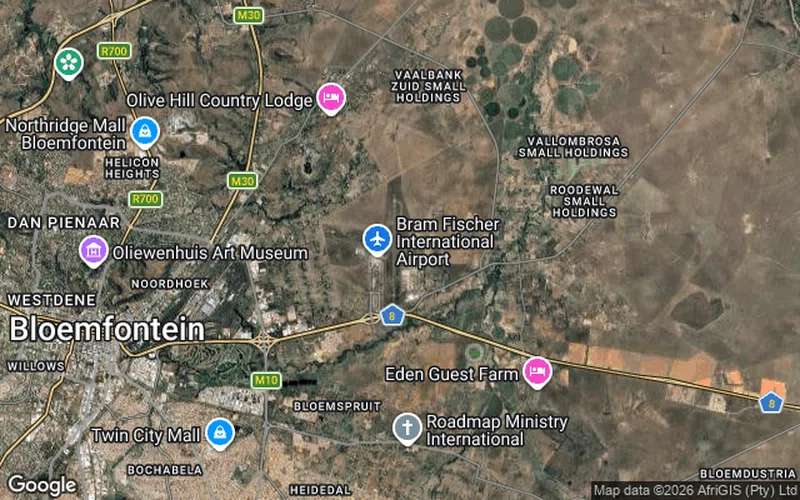
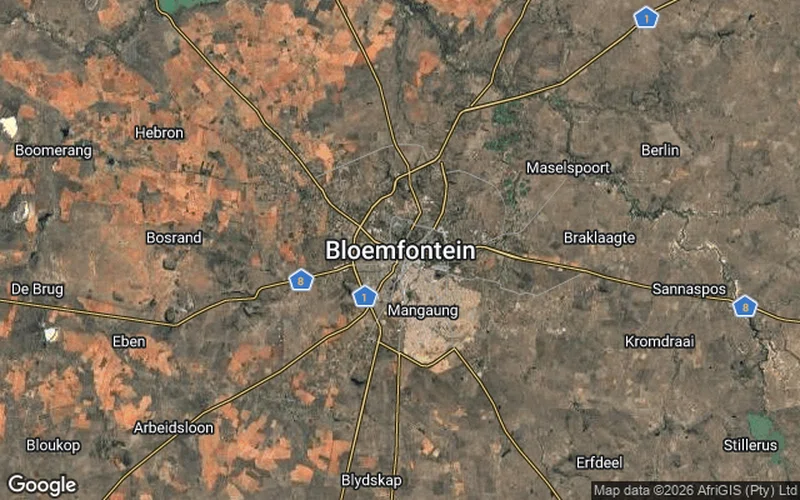
Bloemfontein (; Afrikaans: [ˈblumfɔntəi̯n]; Afrikaans and Dutch "fountain of flowers" or "blooming fountain"; also known as Bloem) is the capital city of the province of Free State of South Africa; and, as the judicial capital of the nation, one of South Africa's three national capitals (the other two being Cape Town, the legislative capital, and Pretoria, the administrative capital) and is the seventh largest city in South Africa. Situated at an altitude of 1,395 m (4,577 ft) above sea level, the city is home to approximately 520,000 residents and forms part of the Mangaung Metropolitan Municipality which has a population of 747,431.The city of Bloemfontein hosts the Supreme Court of Appeal of South Africa, the Franklin Game Reserve, Naval Hill, the Maselspoort Resort and the Sand du Plessis Theatre. The city hosts numerous museums, including the National Women's Monument, the Anglo-Boer War Museum, the National Museum, and the Oliewenhuis Art Museum Bloemfontein also host sub-Saharan Africa's first digital planetarium, the Naval Hill Planetarium and Boyden Observatory, an astronomical research observatory erected by Harvard University. Bloemfontein is popularly and poetically known as "the city of roses", for its abundance of these flowers and the annual rose festival held there. The city's Sesotho name is Mangaung, meaning "place of cheetahs". == History == The origin of the city's name is disputed. It is likely borrowed from the Dutch words bloem (flower) and fontein (fountain), meaning fountain of flowers. Popular legends include an ox named "Bloem" owned by Rudolphus Martinus Brits, one of the pioneer farmers that was taken by a lion near a fountain on his property, while another story names Jan Bloem (1775–1858), a Korana KhoiKhoi leader who settled there. === Early history === Though historically a predominantly Afrikaner settlement, Bloemfontein was officially founded in 1846 as a fort by British army major Henry Douglas Warden as a British outpost in the Transoranje region, at that stage occupied by various groups of peoples including Cape Colony Trek Boers, Griqua, and Barolong. Warden originally chose the site largely because of its proximity to the main route to Winburg, the spacious open country, and the absence of horse sickness. SOURCESWikipedia